
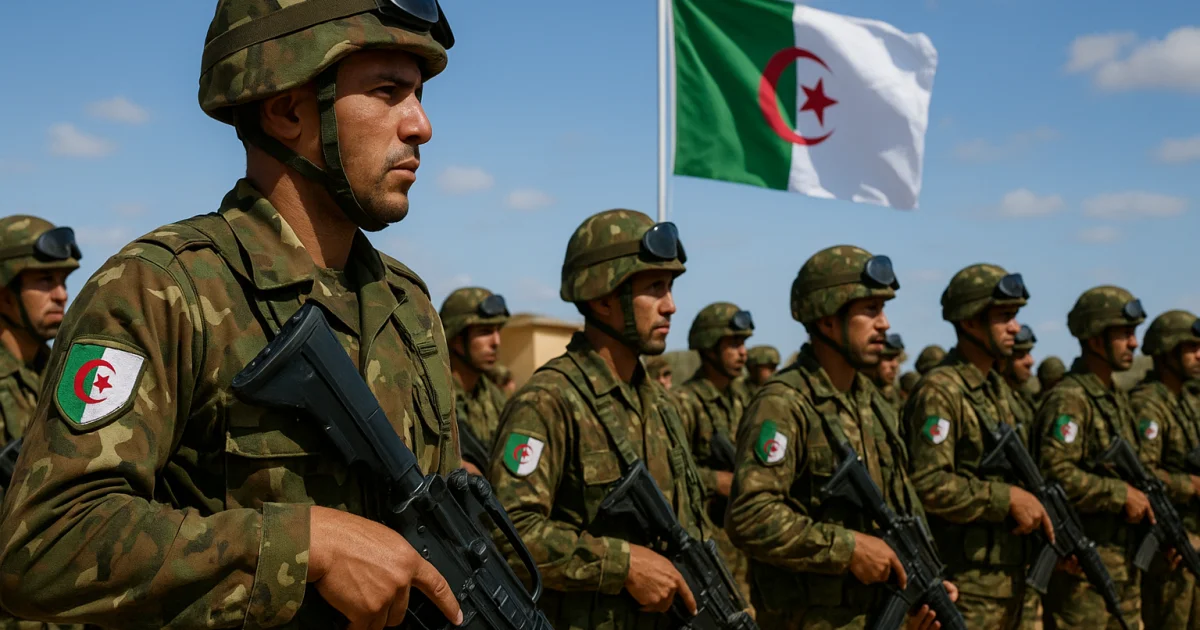
Algeria's parliament has backed sending troops to protect energy facilities in northern Niger, a major shift in a long-standing policy against overseas deployments, though the size and timing have not been announced.
Algeria is to send troops to Niger in its first foreign deployment since it sent forces to Egypt during the 1973 Arab-Israeli war, according to BBC reporting that cites AFP. The upper house of parliament held an emergency session to vote on the proposal, and 148 of 174 senators backed it, AFP reported; the lower house later approved it as well. France 24 has also reported that Algerian army units are set to go to Niger. The timing and number of soldiers have not been announced.
The troops are expected to protect energy and economic infrastructure in northern Niger, near the Libyan border. Algerian senator Belkacem Boulghiti told reporters: "We are not sending our soldiers to wage war in Niger, but for a mission to secure economic infrastructure." The move would be the first use of a 2020 constitutional provision allowing overseas military deployments, and it marks a significant shift in Algeria's long-standing policy against sending forces abroad. Algeria has economic interests in Niger, including a planned gas pipeline to carry Nigerian gas through Niger to Algeria, and state energy company Sonatrach has signed an agreement with Niger's petroleum ministry to explore for oil in the Kafra region.
The decision follows a visit to Algiers by Niger's defence minister, as Niamey seeks support against armed groups, some linked to al-Qaeda or Islamic State. It also comes as the neighbours rebuild ties after a 2025 rift in which Niger recalled its ambassador to Algiers. Algeria condemned the 2023 coup that ousted President Mohamed Bazoum, but relations have since improved: General Abdourahamane Tchiani visited Algeria in February 2026, and in late August, BBC reports, President Abdelmadjid Tebboune sent fighter jets to help suppress a coup attempt and donated four military helicopters. Key details of the mission, including its scale and start date, remain unconfirmed.