
NPR reports the Democratic Republic of Congo's Bundibugyo Ebola outbreak has passed 10,000 infections, the fastest-spreading on record, with cases also reported in Kenya and Nigeria while a first vaccine trial gets under way.
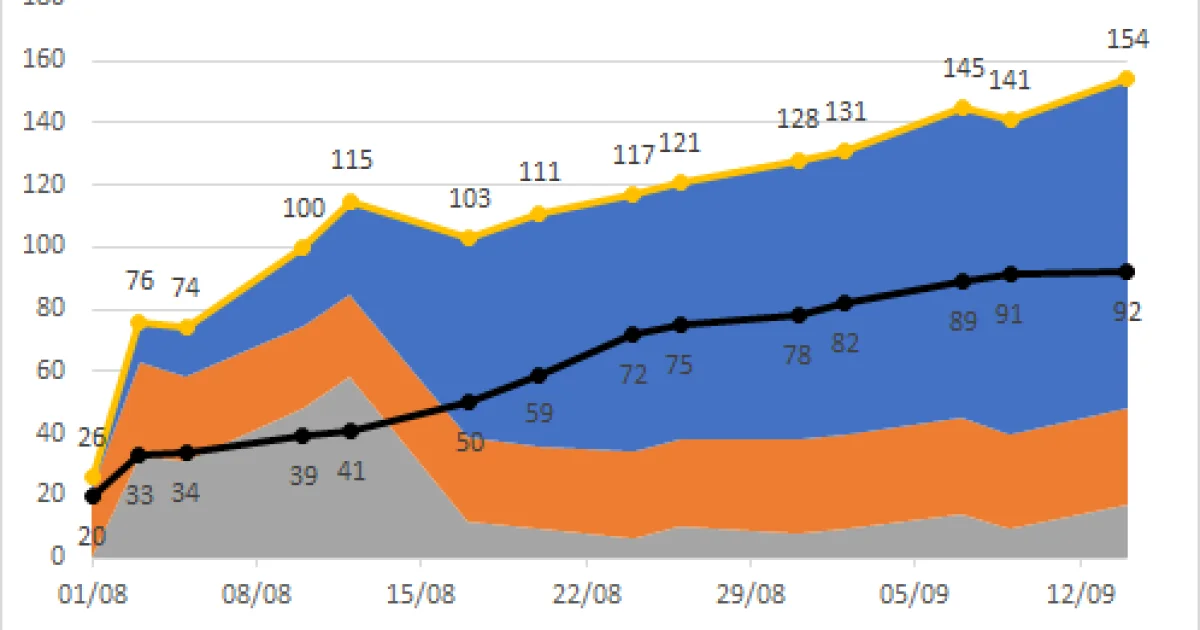
The Ebola outbreak in the Democratic Republic of Congo has passed 10,000 infections since it was declared in May, according to the latest Congolese government figures cited by NPR on 27 October. Aid workers quoted by NPR describe it as the fastest-spreading Ebola outbreak in history: the International Rescue Committee says only about 4,000 people had been infected at a comparable point in the 2014–2016 West Africa epidemic, which still holds the record with more than 28,000 cases and over 11,000 deaths. The current outbreak has killed nearly 5,000 people, roughly a third of them children, according to NPR. Counts vary by source and date; Al Jazeera, citing health authorities, reported more than 9,700 cases and over 4,600 deaths on 24 October.
The outbreak is caused by the rare Bundibugyo species of the virus, which existing tests were not calibrated to detect, and it began in a remote, conflict-affected part of north-eastern Congo. Evidence now suggests it was circulating undetected from February or March, months before the May declaration. Al Jazeera reports that Kenya has confirmed its first case and several more since early October, and that Nigeria confirmed its first case on 20 October, with health officials still investigating where that patient was infected. WHO's Africa director, Mohamed Janabi, has described the situation as a more complex outbreak landscape. Responders face deep mistrust: an International Rescue Committee survey in North Kivu found 85 percent of respondents said distrust of responders keeps them from seeking care, roughly two-thirds of deaths occur in communities rather than treatment centres, and about 80 percent of new cases were not known contacts.
The response has grown, with more than 50 treatment centres, about two dozen diagnostic laboratories and nearly 2,000 treatment beds, according to UNICEF's Ebola incident manager quoted by NPR. No vaccine or treatment is licensed for Bundibugyo. The WHO announced on 24 October that the Tumaini trial has begun in Bunia, vaccinating participants with Ervebo, which is approved for the Zaire species, to test whether it offers cross-protection; Bundibugyo-specific candidates from Oxford and Moderna are expected to join. Experts quoted by NPR warn that vaccines alone will not suffice without contact tracing, isolation and sustained funding, and fear international attention may fade even as the crisis deepens.