
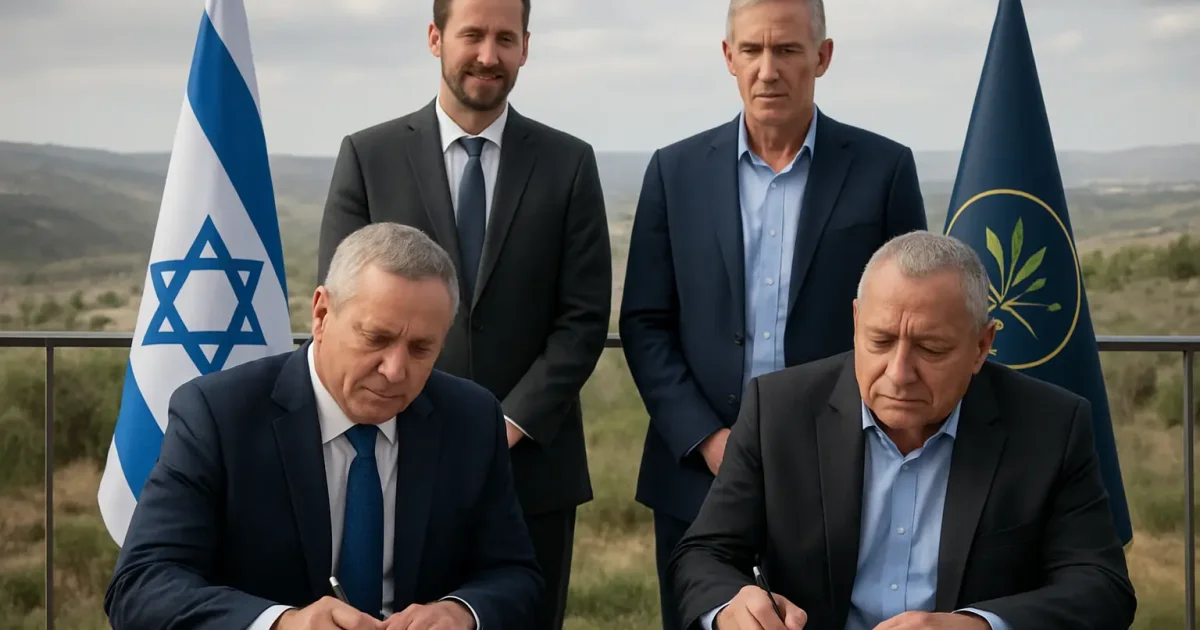
Gadi Eisenkot's Yashar agreed a coalition deal with Yair Golan's Democrats, handing them four ministries as he races to replace Netanyahu by early December.
Israel's former army chief Gadi Eisenkot moved a step closer to forming a government on Thursday, 26 November, after his centrist Yashar party agreed a coalition deal with Yair Golan's left-leaning Democrats, according to a joint statement reported by France 24 and Israeli media. Under the agreement, the Democrats will take four ministerial portfolios: an expanded internal security ministry, now run by far-right politician Itamar Ben-Gvir, a merged labour and welfare ministry, communications, and culture and sport, which will host a new directorate for democracy. Ynet and the Jerusalem Post reported that the Democrats dropped their demand for the justice ministry and that the partners committed to repealing the judicial overhaul pushed by Benjamin Netanyahu's government.
The Democrats are the second party to sign with Eisenkot, after Avigdor Lieberman's right-wing Yisrael Beiteinu agreed terms on Tuesday. The three parties hold 36 seats in the 120-member Knesset, far short of the 61 needed for a majority, France 24 reported. Former prime minister Naftali Bennett's Beyachad party, with 12 seats, backs Eisenkot but has not yet signed a formal agreement. October's election left neither bloc with a majority, and the anti-Netanyahu camp remains split over its next partners. Golan has pressed for an alliance with two Arab-majority lists that won a record number of seats, while Lieberman refuses to rely on them and prefers the ultra-Orthodox parties. Bennett favours a unity government with Netanyahu's Likud, which has held four rounds of talks with Yashar without a reported breakthrough.
Eisenkot has until 6 December to present a government, a deadline that can be extended by 14 days. Golan called on all parties to finalise and sign their agreements quickly so that a new government can take office. Lieberman warned on Thursday that Netanyahu, who remains caretaker prime minister, would drag out unity talks, look for a pretext to collapse them, and could later engineer a crisis to force another election. The questions to watch now are whether Bennett formally joins, which partners Eisenkot picks to reach 61 seats, and whether talks with Likud resume. If he fails before the deadline, the process could pass to another candidate or push Israel closer to a new vote.