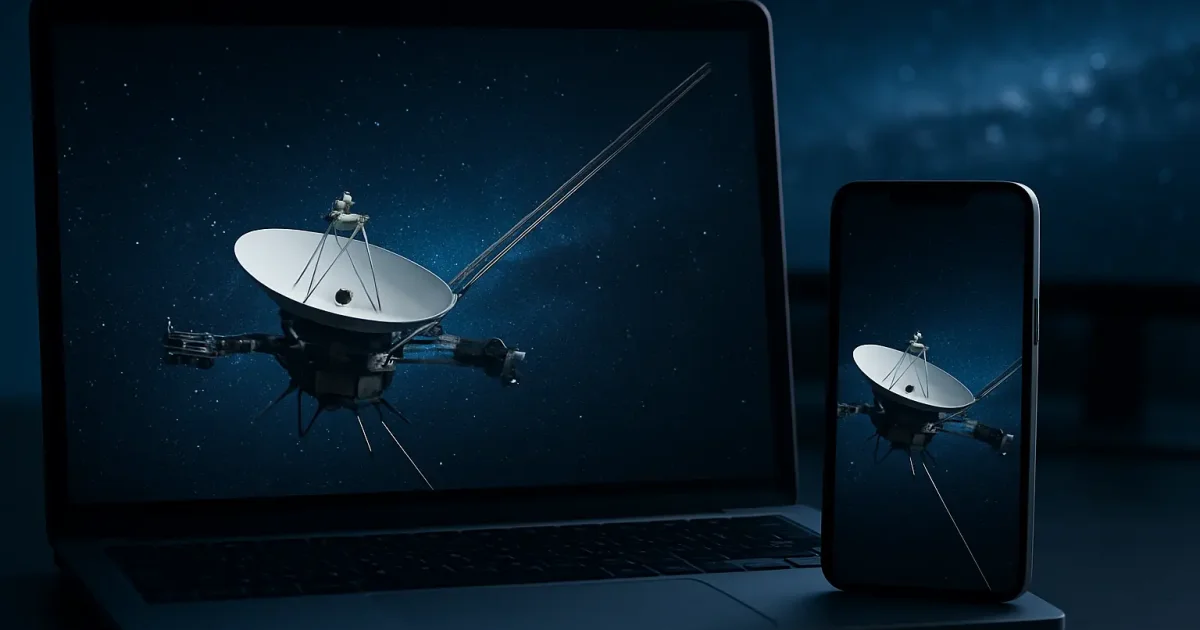
Voyager 1 crossed one light-day from Earth on 18 November, 25.9 billion km away, NASA says, though no science data has arrived since 14 November.
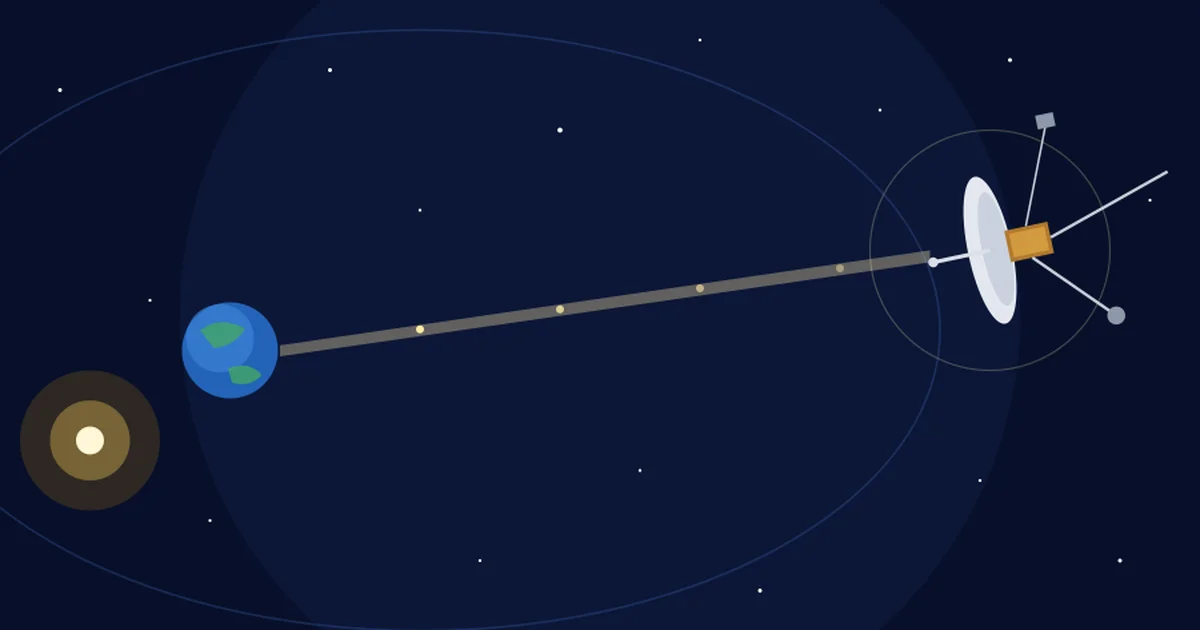
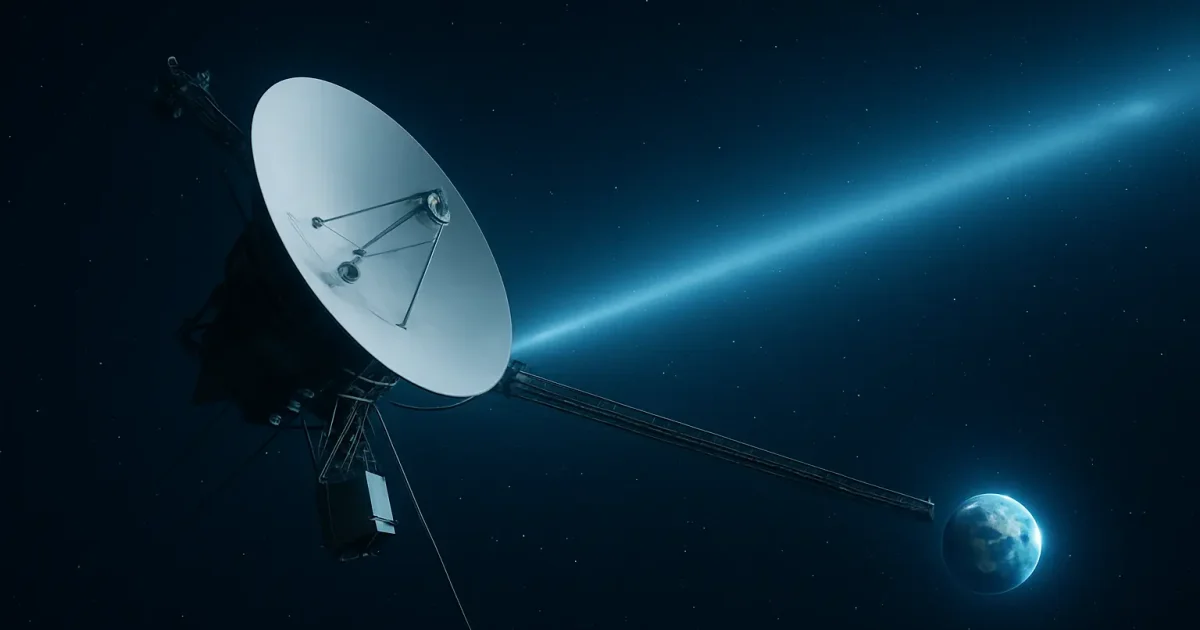
NASA's Voyager 1 has become the first spacecraft to travel one light-day from Earth, the US space agency said on Thursday. A light-day is the distance light covers in 24 hours, about 25.9 billion kilometres (16.1 billion miles). According to NASA, the probe crossed the threshold at 10:16 GMT on 18 November, more than 49 years after its launch in 1977. Because its radio signal moves at the speed of light, controllers at the Jet Propulsion Laboratory in California only heard from the spacecraft a full day later, early on 19 November. There is a catch: the team has received no science or engineering data from Voyager 1 since 14 November. Engineers confirmed the milestone using the probe's carrier signal, the basic radio tone that normally carries its data, together with trajectory calculations, and say they are still analysing the problem.
Voyager 1 and its twin, Voyager 2, were launched in 1977 to exploit a rare alignment of the outer planets. They sent back the first high-resolution images of Jupiter and Saturn, and Voyager 2 went on to visit Uranus and Neptune. Travelling at roughly 61,000 km/h, Voyager 1 left the heliosphere, the bubble of solar particles and magnetic fields that surrounds the planets, in 2012; Voyager 2 followed in 2018. They remain the only probes working in interstellar space. Project scientist Linda Spilker said one of the biggest surprises has been how far the Sun's influence still reaches. Keeping the pair alive has required inventive fixes for clogged thrusters, a faulty computer and shrinking power from their plutonium generators, which lose about 4 watts a year. Earlier in 2026, engineers swapped three devices on Voyager 1 for lower-power alternatives, a move NASA admits carried risk.
NASA expects those power savings to keep the current science instruments on both probes running until at least their 50th launch anniversaries in summer 2027. The immediate question is whether engineers can restore the data stream that stopped on 14 November; the agency has not said what caused the fault. Contact runs through NASA's Deep Space Network, a set of large antennas at three sites around the world. Project manager Suzanne Dodd said the team still listens to Voyager 1 every day and sends it commands once a week, but each message now needs a full day to travel in each direction, so one command and its reply take two days. When the probe finally falls silent, it will keep drifting outward carrying its Golden Record, a gold-plated disc of sounds and images from Earth.