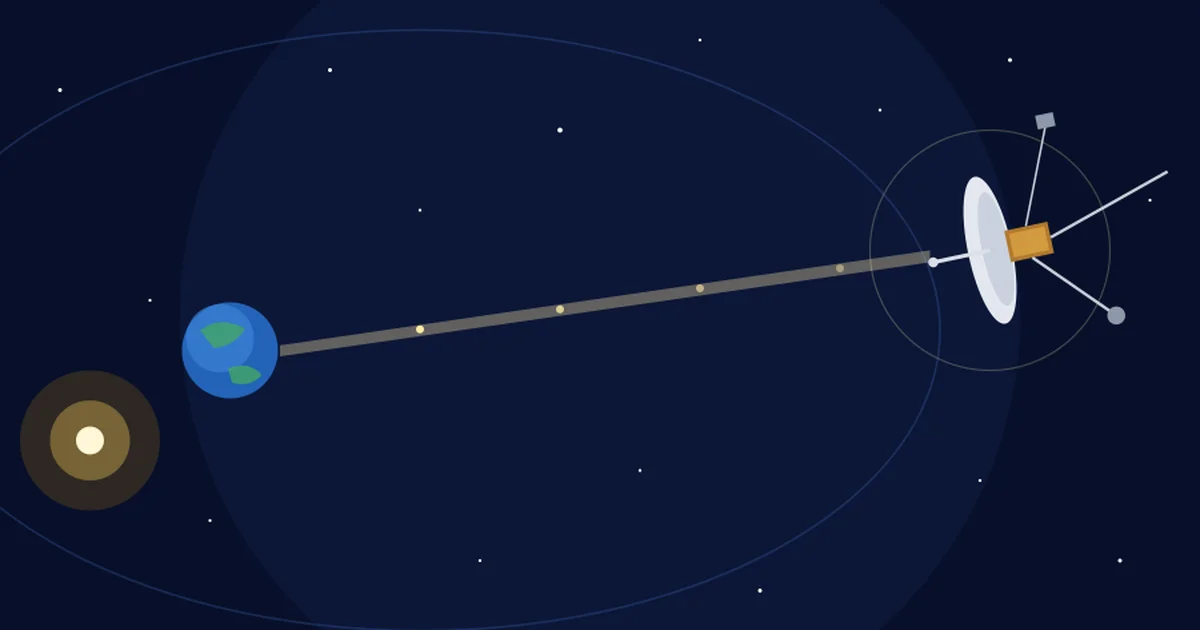
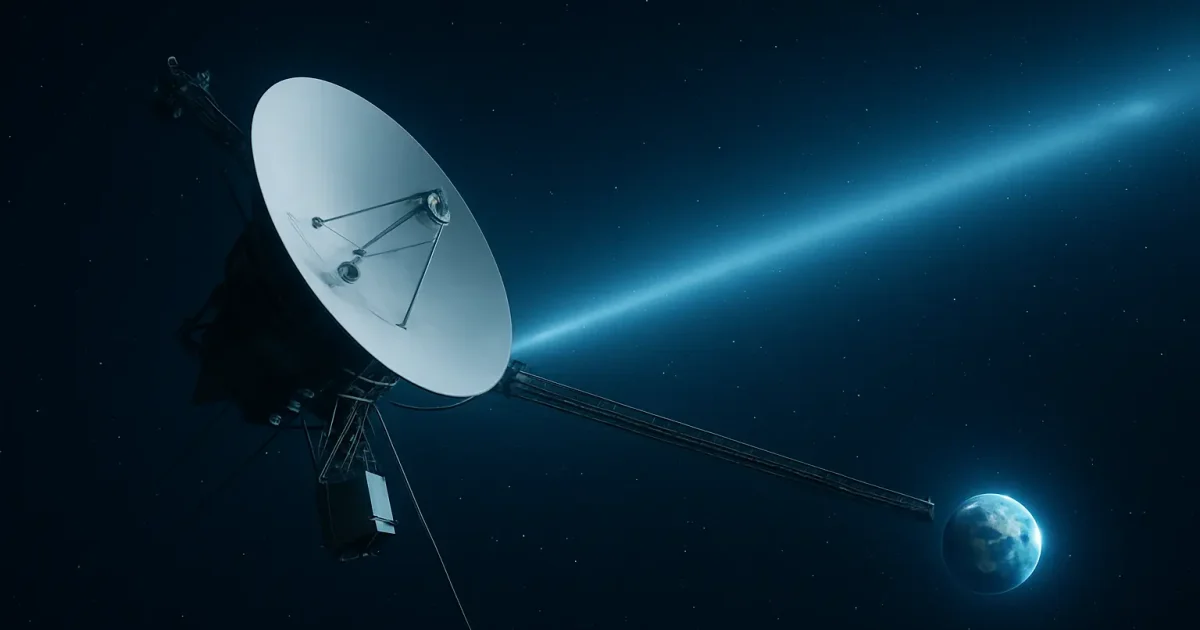
Voyager 1 crossed one light-day from Earth on 18 November, NASA says, confirming it from a carrier signal as engineers study why science data stopped on 14 November.
NASA's Voyager 1 has become the first spacecraft to reach one light-day from Earth, about 25.9 billion kilometres (16.1 billion miles) away, the agency announced on Thursday. According to NASA, the probe crossed the threshold at 2:16 a.m. PST (10:16 GMT) on 18 November, after more than 49 years of travel. Because a radio signal now needs a full 24 hours to make the trip, the team at NASA's Jet Propulsion Laboratory in Southern California heard from the spacecraft only early on Thursday, 19 November.
The milestone arrives with a complication. NASA says it has not received science or engineering data from Voyager 1 since 14 November, and that the spacecraft is currently returning only its carrier signal, the radio tone that normally carries that data. Engineers used this carrier signal together with trajectory calculations to confirm the light-day crossing, and they are still analysing the cause of the data problem. The embedded video is NASA's official mission update and conversation, published on 19 November, in which agency leaders and mission team members discuss the status of Voyager 1 and Voyager 2 and take questions; it is a briefing, not footage of the spacecraft itself.
Launched in 1977, Voyager 1 flew past Jupiter and Saturn, became the first spacecraft to enter interstellar space in 2012 and now travels at about 61,155 km/h. Its twin, Voyager 2, crossed the same boundary in 2018. Both probes lose about 4 watts of power a year as the plutonium in their generators decays, and NASA says recent power-saving changes should keep their current science instruments running until at least their 50th launch anniversaries next summer. "Even traveling at the speed of light, signals now take 24 hours to reach the spacecraft and 24 hours to reach us," said Voyager project manager Suzanne Dodd.