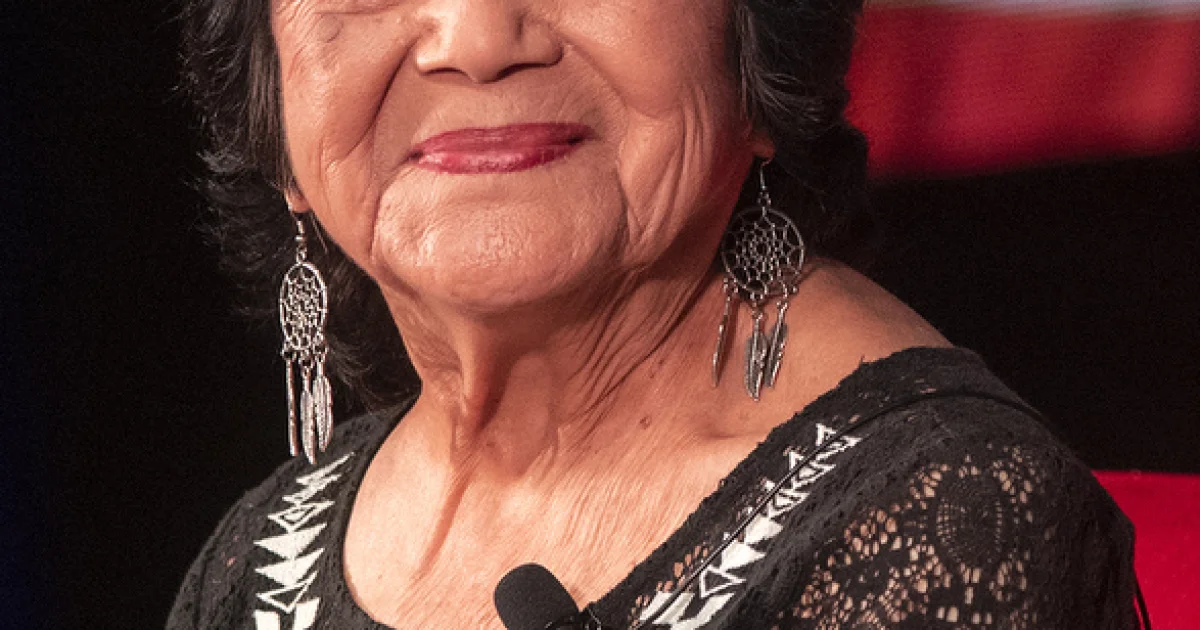
Huerta's family said the labor leader, feminist and civil rights icon died at home on Wednesday; she co-founded the United Farm Workers and coined the rallying cry 'Sí, se puede'.
Dolores Huerta, the labor leader, feminist and civil rights figure who co-founded the United Farm Workers union and coined the slogan "Sí, se puede!" ("Yes, it can be done"), has died at the age of 96. Her family said in a statement issued through her foundation that she died at home on Wednesday. NPR and France 24 both reported her death. She stayed active well into her 90s, joining protests and speaking about race, poverty, LGBTQ+ and women's rights for her Bakersfield, California-based foundation.
Born Dolores Clara Fernández in 1930 in Dawson, New Mexico, Huerta was an elementary school teacher in California's San Joaquin Valley before turning to organizing, saying she could do more for hungry children by organizing their farmworker parents. In 1962 she and César Chávez started the National Farm Workers Association, which later became the United Farm Workers. She negotiated contracts with large growers, won some of the first health and benefit plans for farmworkers, took part in the Delano grape strike, and directed national grape and lettuce boycotts in the early 1970s that helped pave the way for California's first state law recognizing farmworkers' right to collective bargaining. She was jailed 22 times for union demonstrations and was seriously injured by a police baton at a 1988 protest in San Francisco.
Huerta received the Presidential Medal of Freedom from President Barack Obama in 2012, became the first Latina inducted into the National Women's Hall of Fame and received nine honorary doctorates; schools and streets bear her name. This year she disclosed that she had been sexually abused by Chávez in the 1960s, leading to the birth of two children, a secret she said she kept for about 60 years for fear of undermining the farmworker movement. Her death closes the life of one of the most influential figures of the American labor and civil rights movements.