Researchers at the University of Sheffield say they have reproduced the effect that makes the British Museum's 1,600-year-old Lycurgus Cup look green in reflected light and red when lit from behind, ARTnews reports.
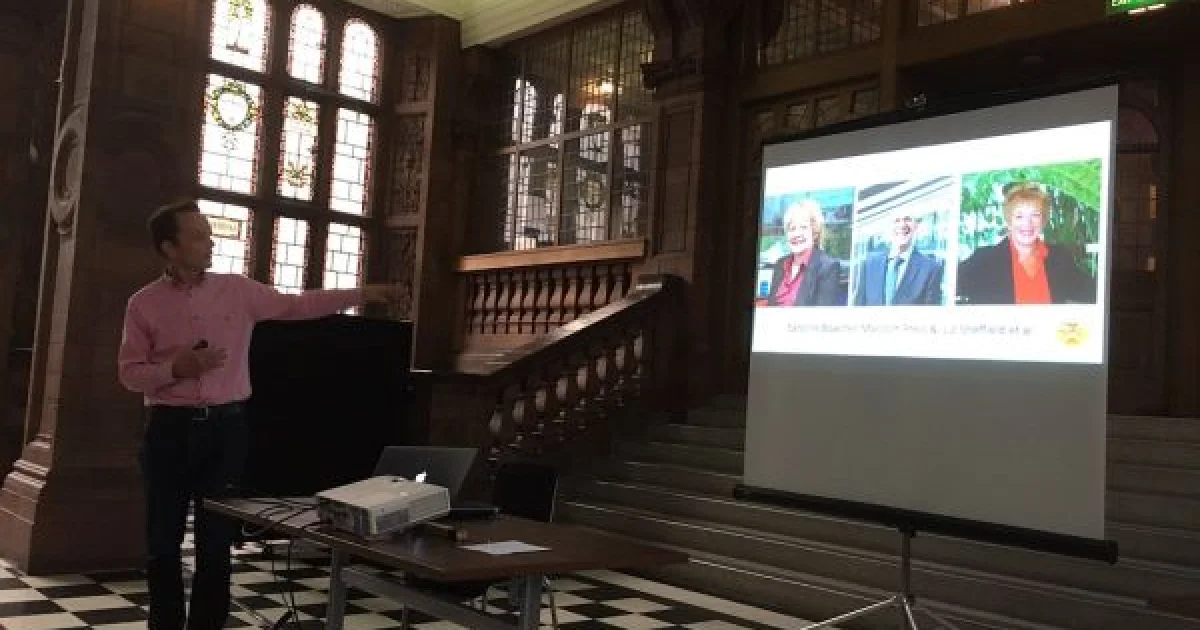
Researchers at the University of Sheffield in England say they have recreated the colour-changing properties of the Lycurgus Cup, the roughly 1,600-year-old Roman vessel held by the British Museum. The cup appears green in ordinary lighting but glows red when lit from behind, an effect that has puzzled experts for centuries. According to ARTnews, which cites reporting by the Guardian, team member Lisa Hollands called the project a "labor of love" and noted that earlier attempts to match the effect had met with limited success.
To emulate the effect, the researchers embedded nanoparticles of gold and silver into glass, each described as a thousand times smaller than a grain of sand. Hollands explained that when light shines through the glass, the particles block blue and green wavelengths and let reds and oranges pass; when light bounces off the surface, the particles scatter it and produce the opaque green seen in normal lighting. "To me, it's magic," she told the Guardian, adding that the Romans might laugh at her experiments. The reports describe a recreation of the optical effect rather than proof of exactly how Roman craftsmen worked.
The cup's carved scene alludes to King Lycurgus from the sixth book of Homer's Iliad and celebrates the triumph of the wine god Dionysus over a vine-wrapped Lycurgus. It was named one of the seven glass wonders of the world by the committee behind the UN-designated International Year of Glass in 2022. Ian Freestone, emeritus professor of archaeological materials at University College London, suggested the green-to-red shift could relate to the ripening of a grape and may have been used in a drinking ceremony, a hypothesis rather than an established fact. A related sculpture by glass artist Elliot Walker, commissioned by the University of Sheffield, will feature in the university's Festival of the Mind in November before joining the collection of its Turner Museum of Glass.